What an Epoxy Garage Floor Install Actually Involves
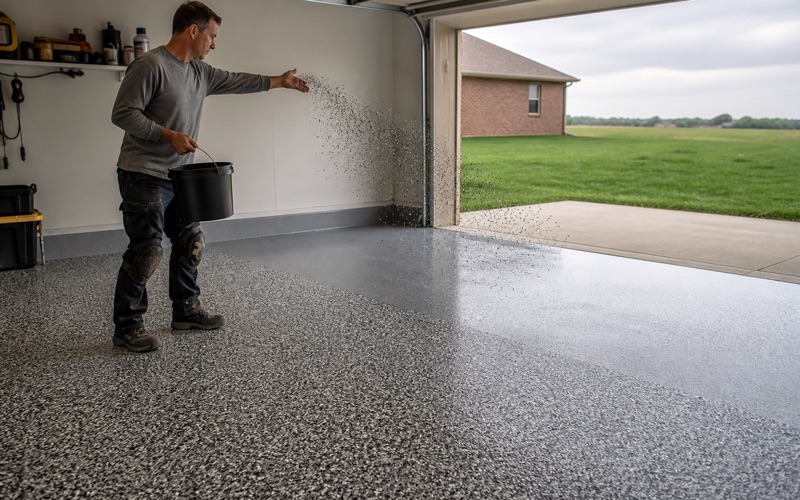
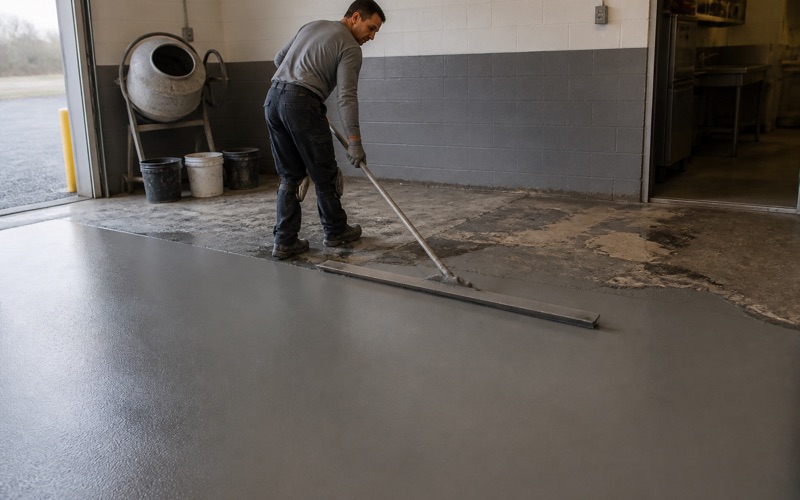
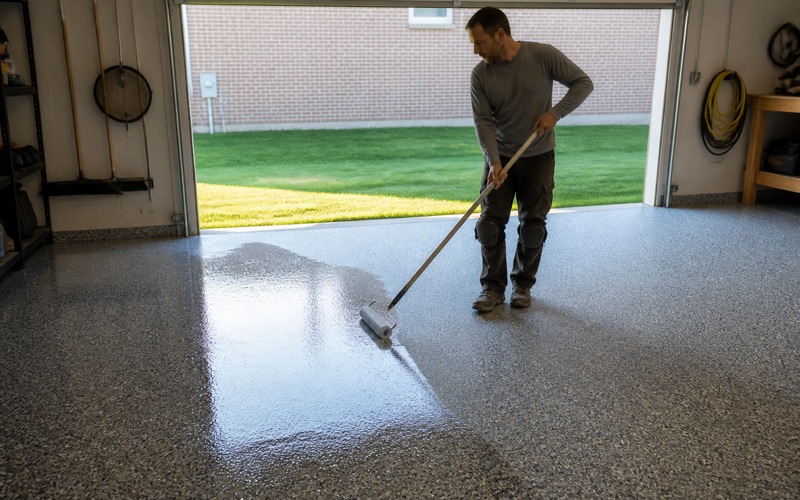
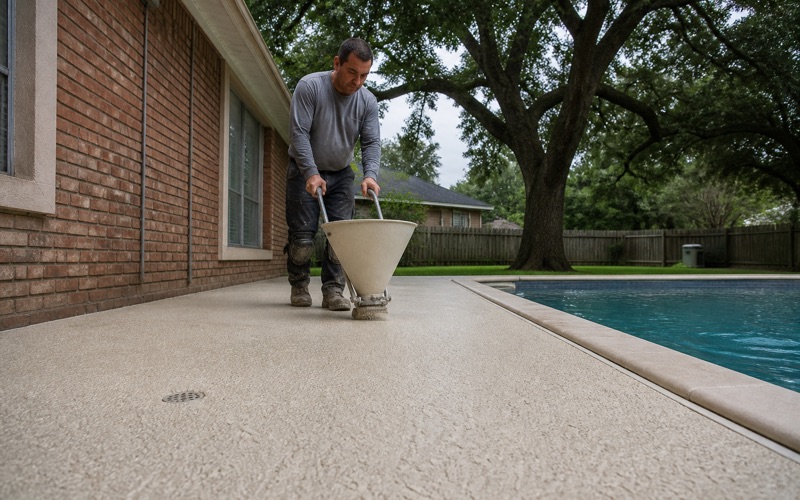
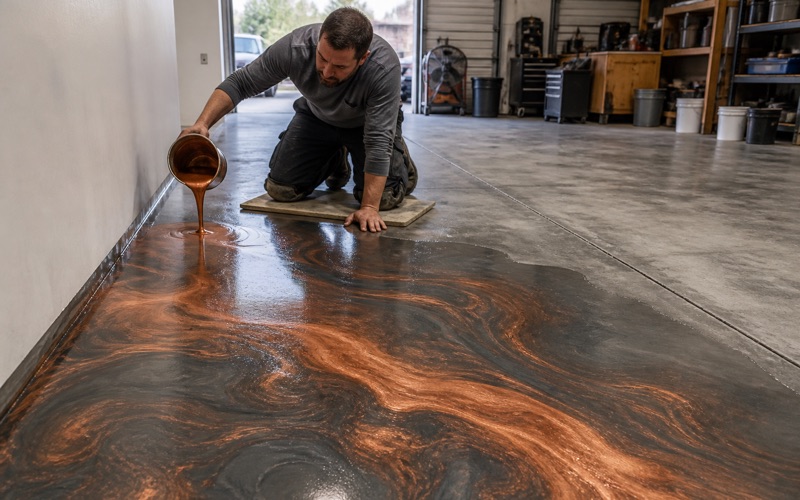
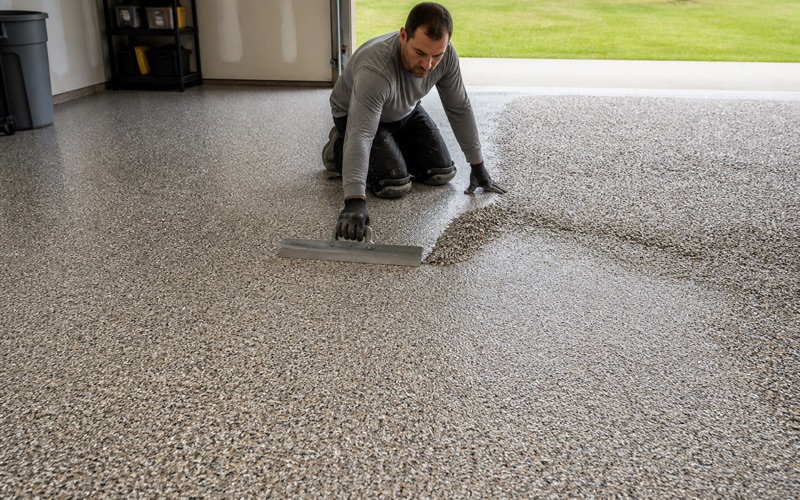
A garage coating is a sequence, not a product: assess the slab, grind it open, treat cracks and joints, prime, build, broadcast, and topcoat. We walk the floor with you first and mark what we find, so the scope is agreed before anything is mixed. Knowing the order matters because most failures trace to a step someone skipped rather than a resin someone chose badly.
Finding Out What Your Garage Sits On
The ground is not consistent across Temple, so we establish which soil your address sits over before specifying anything. Houston Black and Heiden are true Vertisols with very high shrink-swell; the Austin, Stephen and Purves soils elsewhere in town move a fraction as much. That answer changes how we treat cracks, what we promise about them, and sometimes whether a rigid system is the right call at all.
Shrink-Swell Clay and What It Does to a Slab
Smectitic clay takes on water and expands, then dries and contracts, and on the heaviest ground here that cycle keeps cracks open for a large share of the year. A slab bridging soil that is doing this gets loaded unevenly and relieves the stress by cracking. Understanding it as an annual cycle rather than a one-time settling event is what separates a realistic floor specification from an optimistic one.
Reading Cracks: Settled or Still Moving
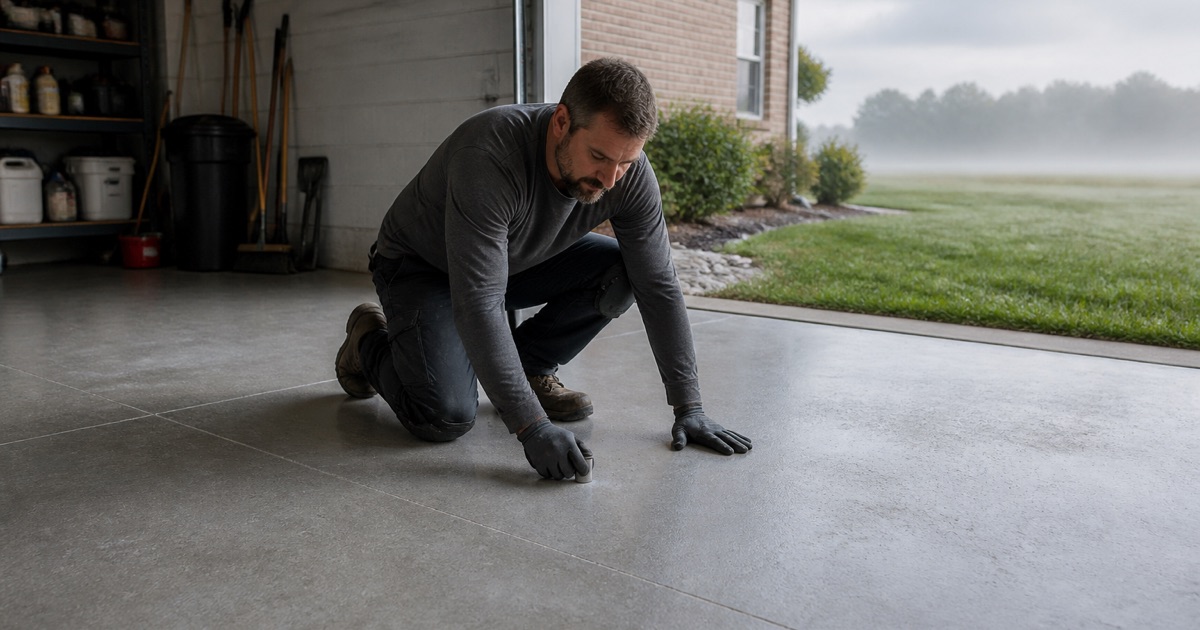
We look at edge condition, width variation along the run, and whether the two sides sit level with one another to judge whether a crack has stopped or is still working. A dormant crack can be filled and forgotten. A live one cannot, and treating the second like the first is how a finished floor develops a matching line through the coating within a year.
Why a Live Crack Becomes a Joint
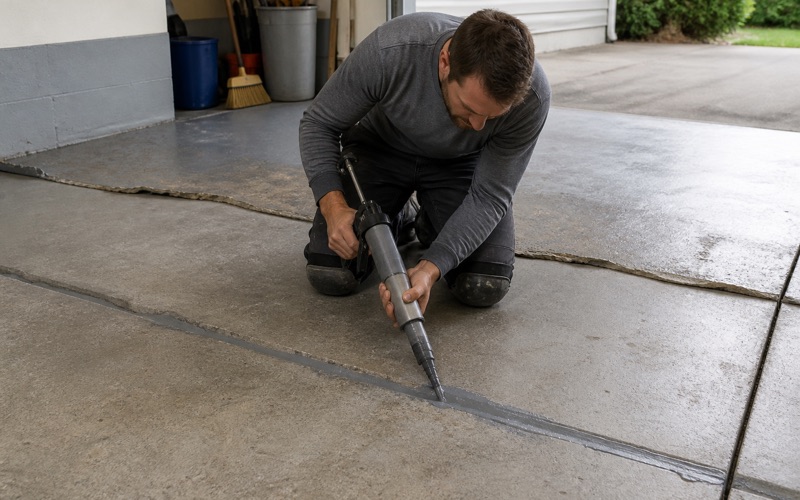
Where a crack is still moving we treat it as a control joint and detail it deliberately, using a semi-rigid polyurea filler chosen to accept movement rather than a rigid paste that simply transfers it into the coating. We also tell you it may telegraph again seasonally. That is an honest maintenance item, and calling it one now is better than calling it a warranty claim later.
Moisture Testing Before Anything Is Ordered
On an older slab we run calcium chloride testing to ASTM F1869 or place in-situ relative humidity probes to ASTM F2170, reading both against the thresholds in ASTM F710. The plastic sheet test in ASTM D4263 is asymmetric and we treat it as such: a positive result fails a slab outright, but a negative one is not evidence the slab is dry.
Grinding the Slab Open
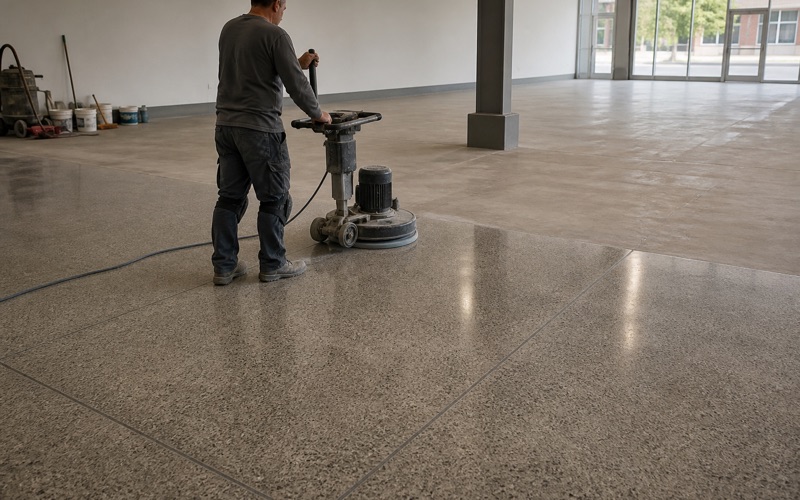
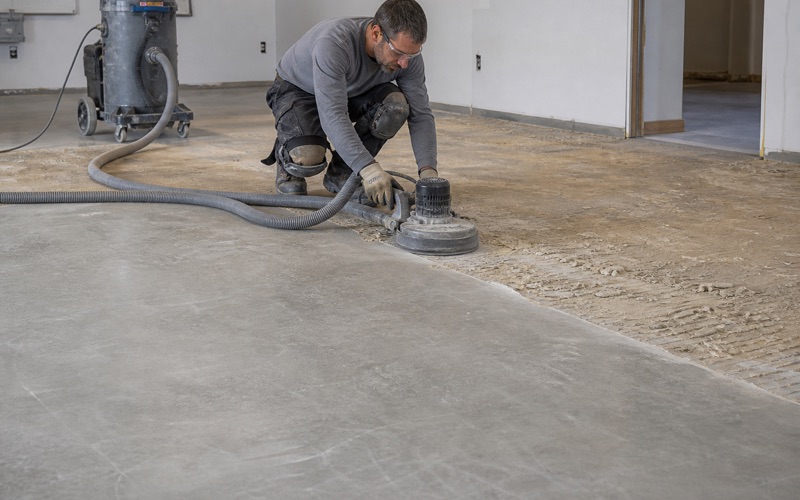
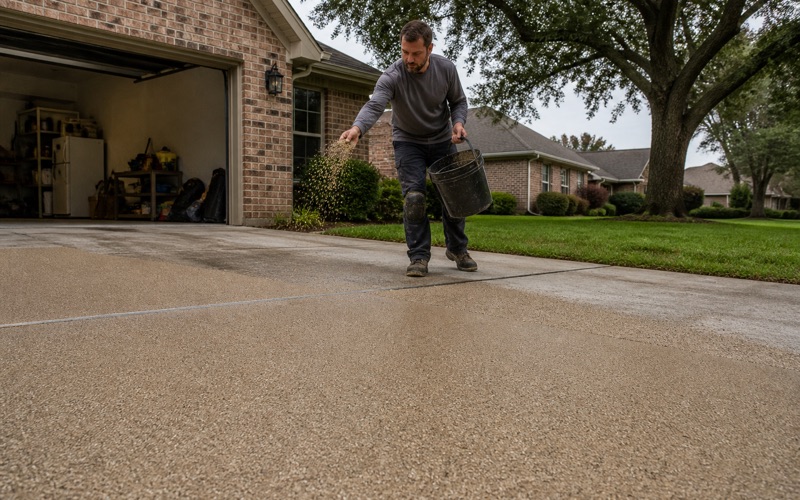
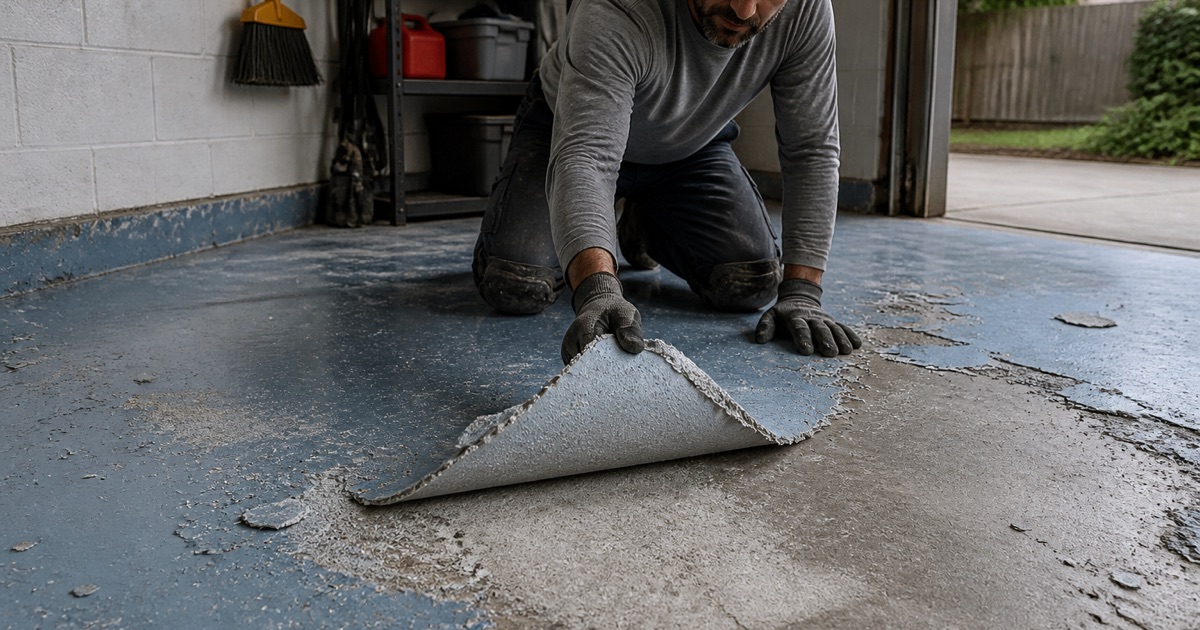
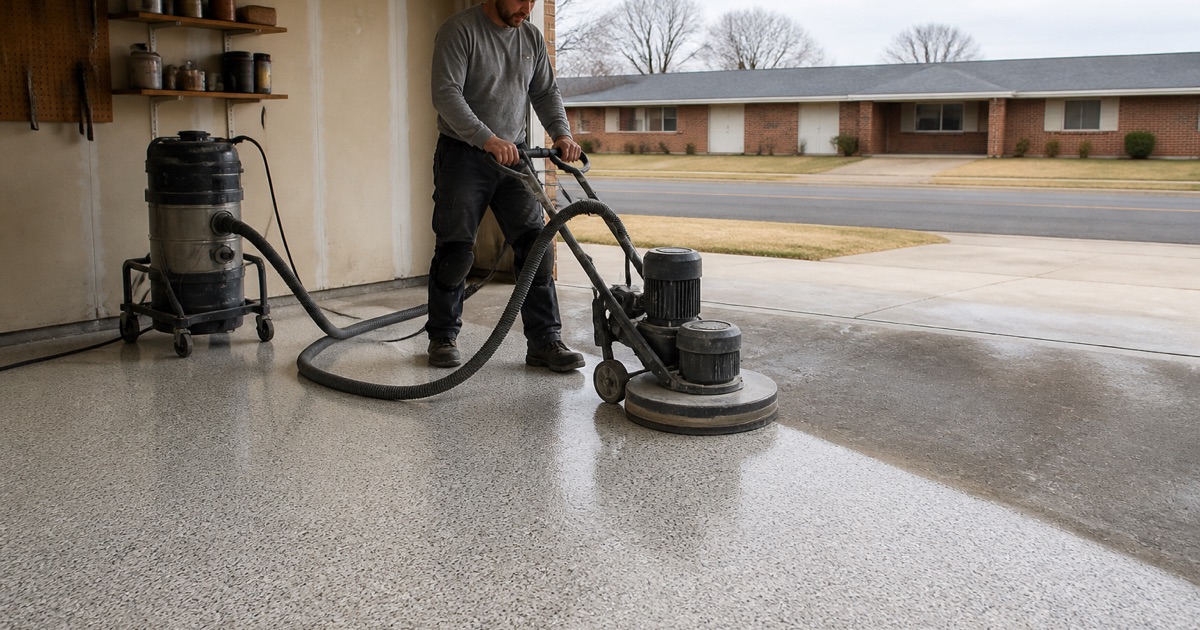
Diamond grinding removes the closed, troweled surface layer and any previous sealer, leaving an open profile the primer can key into. We select the grit sequence and the diamond bond against the concrete’s own hardness — the counterintuitive rule being that hard concrete takes a soft bond. Coating a sealed or power-troweled floor without this step is the single most common reason a new system releases.
Post-Tensioned Slabs and Cables in the Concrete
Much of the newer construction around Temple is post-tensioned, meaning steel tendons run under tension through the slab. That changes what may be cut, cored or mechanically fixed, and it makes joint cutting a decision rather than a default. We establish slab type before any saw comes out, because a cut tendon is a structural repair, not a flooring problem.
Emptying the Garage, and Who Moves What
The floor has to be completely clear, including shelving, freezers, and whatever has accumulated along the walls over the years. We agree in advance what we move and what stays with you, and we allow realistic time for it. Getting this settled at quoting stage is what keeps a two-day install from becoming a four-day one for reasons that have nothing to do with the coating.
Thresholds, Step-Downs and Edges
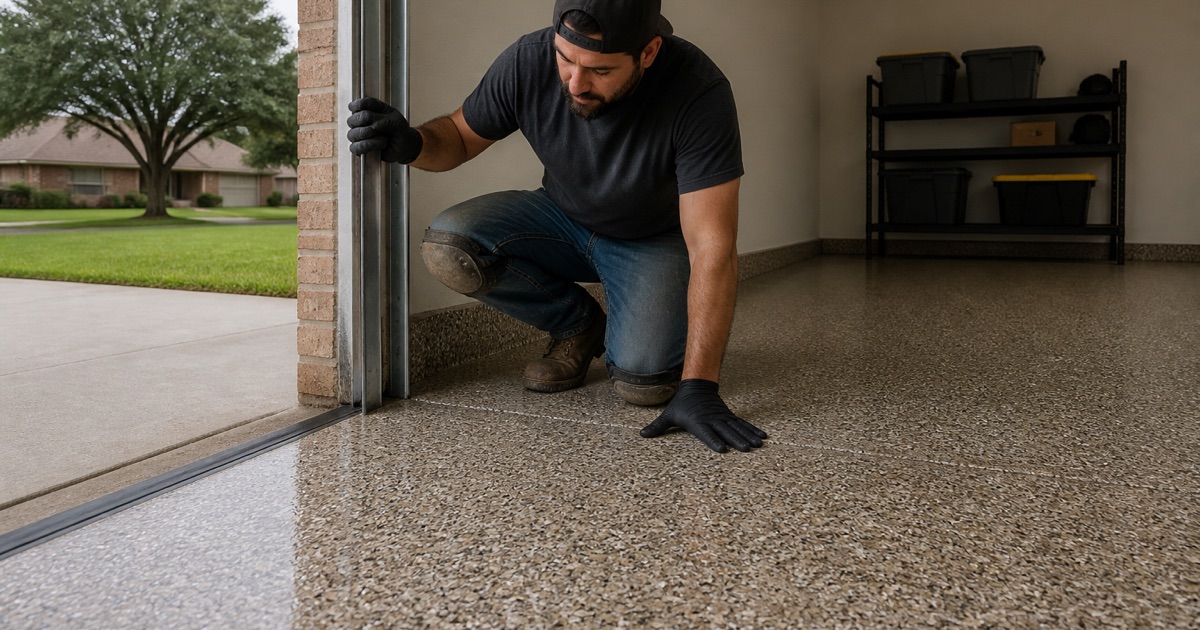
How a floor ends is what people actually look at: the line at the garage door, the step into the house, and the perimeter where the coating meets the wall. We agree the termination detail up front — a clean saw-cut edge, a rolled and feathered turn-down, or a coved base where the room warrants it — because a well-installed floor with an improvised edge reads as unfinished.